Children as Learners and Creators: The Transformation of English Language Learning in the Digital Age
Christy Natalia
Technology is changing our lives quickly, and education is no exception. Children today are growing up surrounded by digital tools and experiences. Kids are used to watching videos, hearing different languages, and connecting on social media. Because of this, education needs to adapt. We can’t rely only on textbooks, worksheets, or lectures anymore. Teachers should offer learning that fits the world children live in today.
For English teachers, the challenge is to help students learn vocabulary and grammar and also use English confidently in real life. This means seeing children as active learners, not just passive listeners.
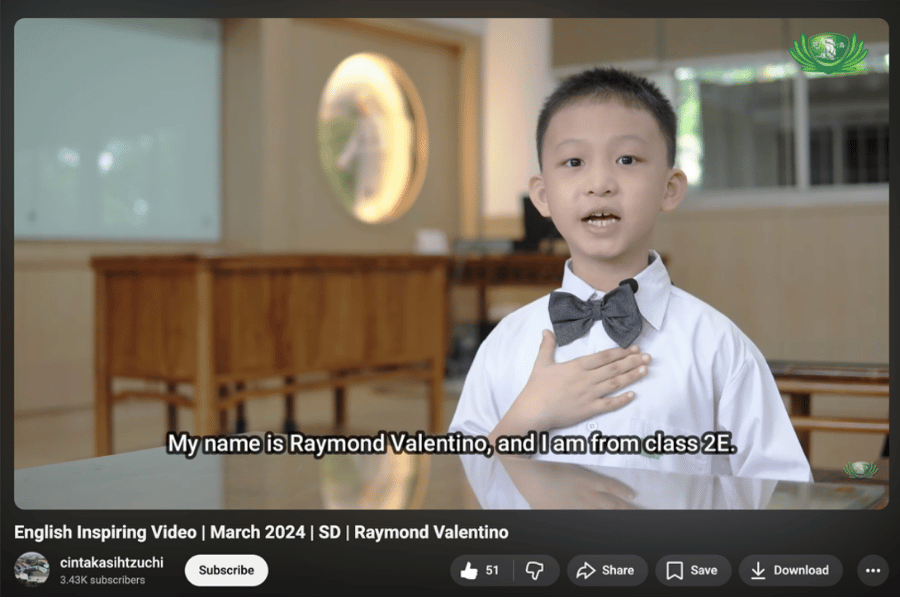
Many kids already use social media like YouTube to watch all kinds of videos. But what if they started making their own educational content too? At Cinta Kasih Tzu Chi School, students put this idea into practice by creating short videos that show how to use English in daily life and more advanced situations. Everyone from kindergarten to high school takes part.
With this approach, students don’t just memorize sentences. They learn what their words mean, practice speaking clearly, and build confidence in communicating. Their videos are uploaded to YouTube so other students can watch and learn too.
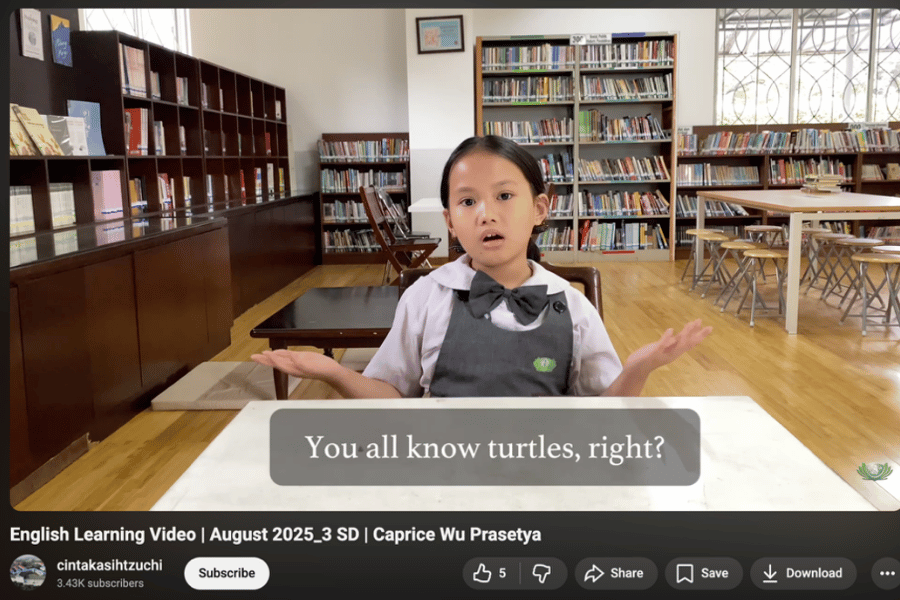
This method is even more engaging because it encourages interaction. At the end of each video, student creators ask a question or give a challenge for viewers, who can reply in the comments. This turns learning into a two-way process. Creators take responsibility for their content, and viewers are invited to think and respond. The comment section becomes a space for everyone to learn together.
In this setup, teachers guide and support students. They help pick topics, suggest language, and make sure the videos meet learning goals. Once videos are uploaded, parents can see their children’s progress in English firsthand.
What’s happening at Cinta Kasih Tzu Chi School shows that when children are both learners and creators, learning feels less intimidating. As educators, we should use technology not just as a tool, but as a way to empower children. This helps them see their own potential to create and make a difference in their communities. When we give kids the chance to learn and create, they gain language skills, build confidence, and shape their own futures.